Toilet/Bidets
December 2025
Time For Toilet Talk
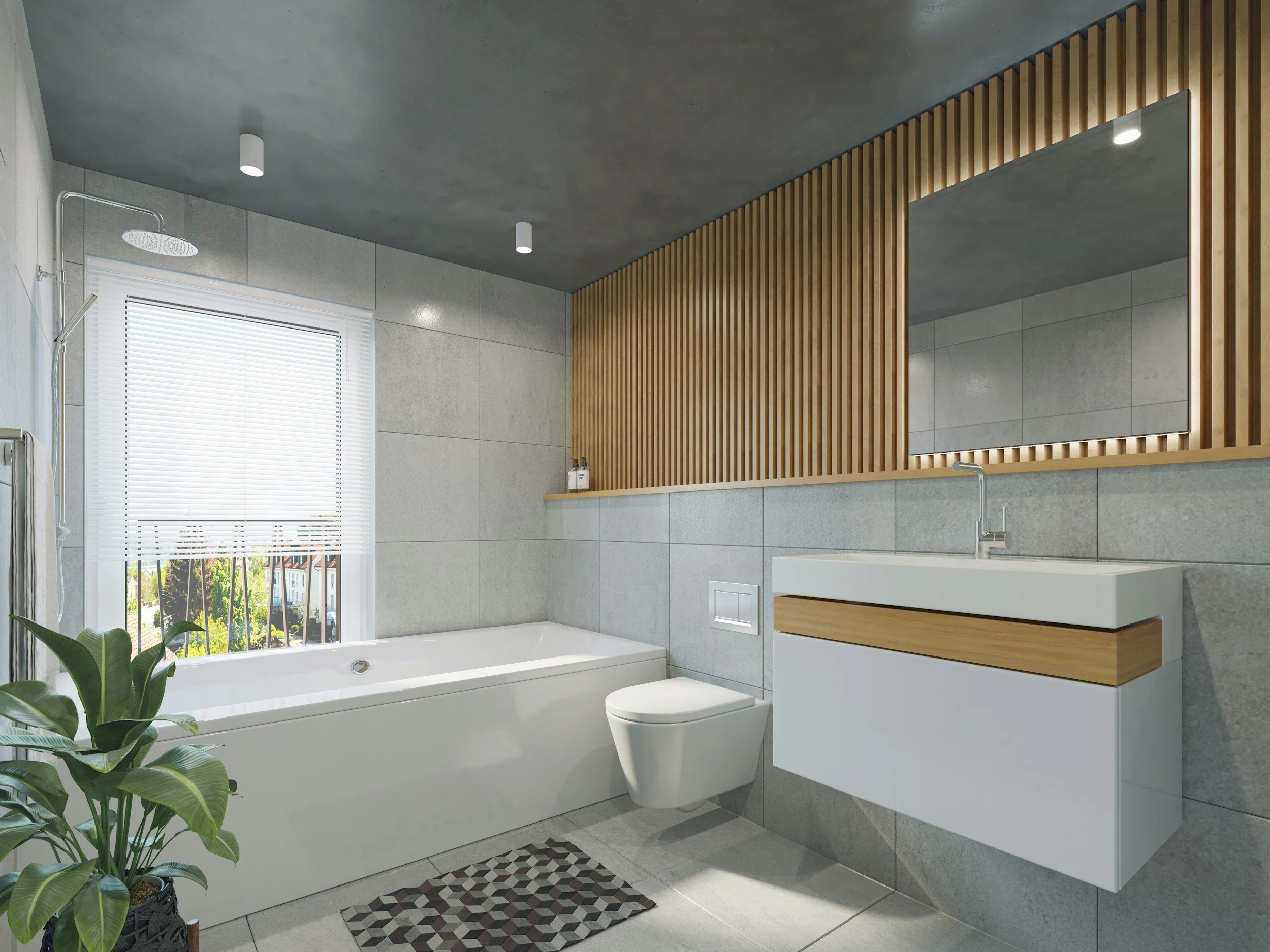
Let’s flush outdated designs and make way for smarter, more spacious bathrooms beginning with the toilet.
In May 2023, we received new accessiblity guidelines for public restrooms. Basically, it was determined that we needed 4” more depth in a public restroom stall. The turning radius increased to a minimum of 67”. While a “T” turn, which a person using a wheeled device must often perform, think of a 3 point turn in a car, required increases in both depth and width, by about 6”. This is all great news.
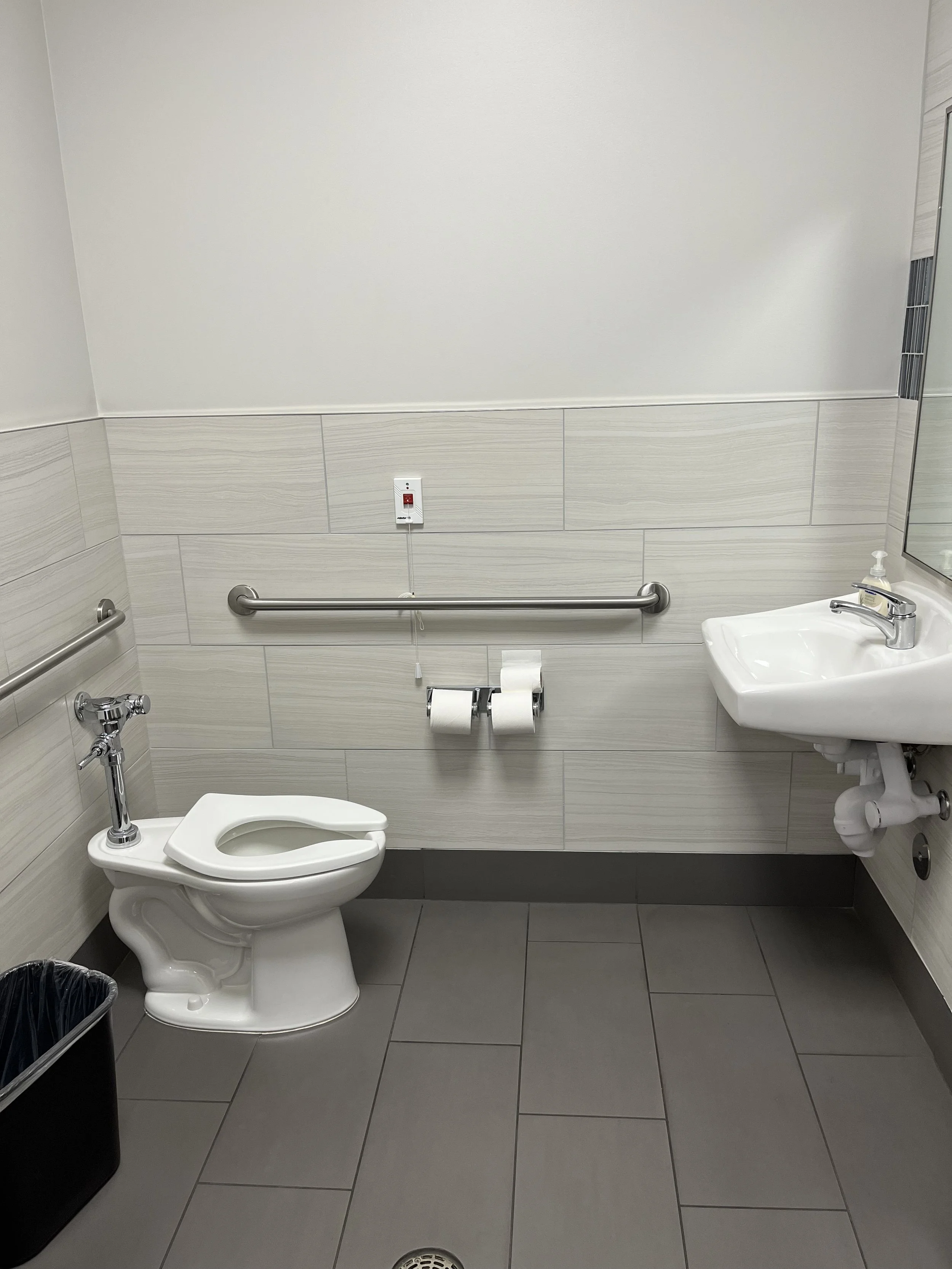
Public Restroom
Access all around the toilet. Grab bars are behind the toilet and on the wall. Turning distance in front and beside the toilet is 5’.
Sink has UD faucet with an opening on the bottom to accommodate someone using a wheelchair to get up close to the sink.
This toilet is not raised however!
As a physical therapist who frequently trained children to use their wheelchairs in public restrooms, I often found the space so cramped that both the student and I—at 5'9"—couldn’t fit comfortably at the same time.
The new guidelines should be considered in our private home spaces as well.
UD Checklist for Optimum Toilets/Bidets
Turning Radius: New construction should allow for at least a 6’ turning radius in a bathroom, and particularly in front of a toilet.
The watercloset space: The toilet should be in a space of 58” deep by 30” wide at minimum. Remember these are all minimums and I prefer to tack on extra inches to allow for a caregiver to be in the space as well. A wheelchair accessible toilet compartment should be at least 32” wide
Elevated toilet
Slow close toilet seat
Bidet
Grab bars
Flooring
The turning radius in front of a toilet should be at least 6’ for the minimum space. If a person needs help with toileting you will want more space. If a person uses a wheeled device, a walker, or wheelchair etc. than it is critical to have the turning space.
Water closet space: Imagine having the capability to approach someone from either side, back and front. Caregivers need these options to properly assist a person toileting if they are going to be safe as well as the person they are assisting. It is valuable space added to a bathroom but so very necessary in keeping people safe and comfortable.
There should be at least one elevated toilet seat in a bathroom in the home. I started installing elevated toilets in our homes back when we had 3 generations living or visiting the house. Either toilets are shrinking in size or I am getting shorter! A typical toilet seat is 14-15” off the floor. A chair seat toilet is 16” and an elevated toilet is 19” off the ground. That additional 5” is very helpful in keeping us independent while getting off the toilet as we age! Children can negotiate this additional height using a stool or their unique climbing skills!
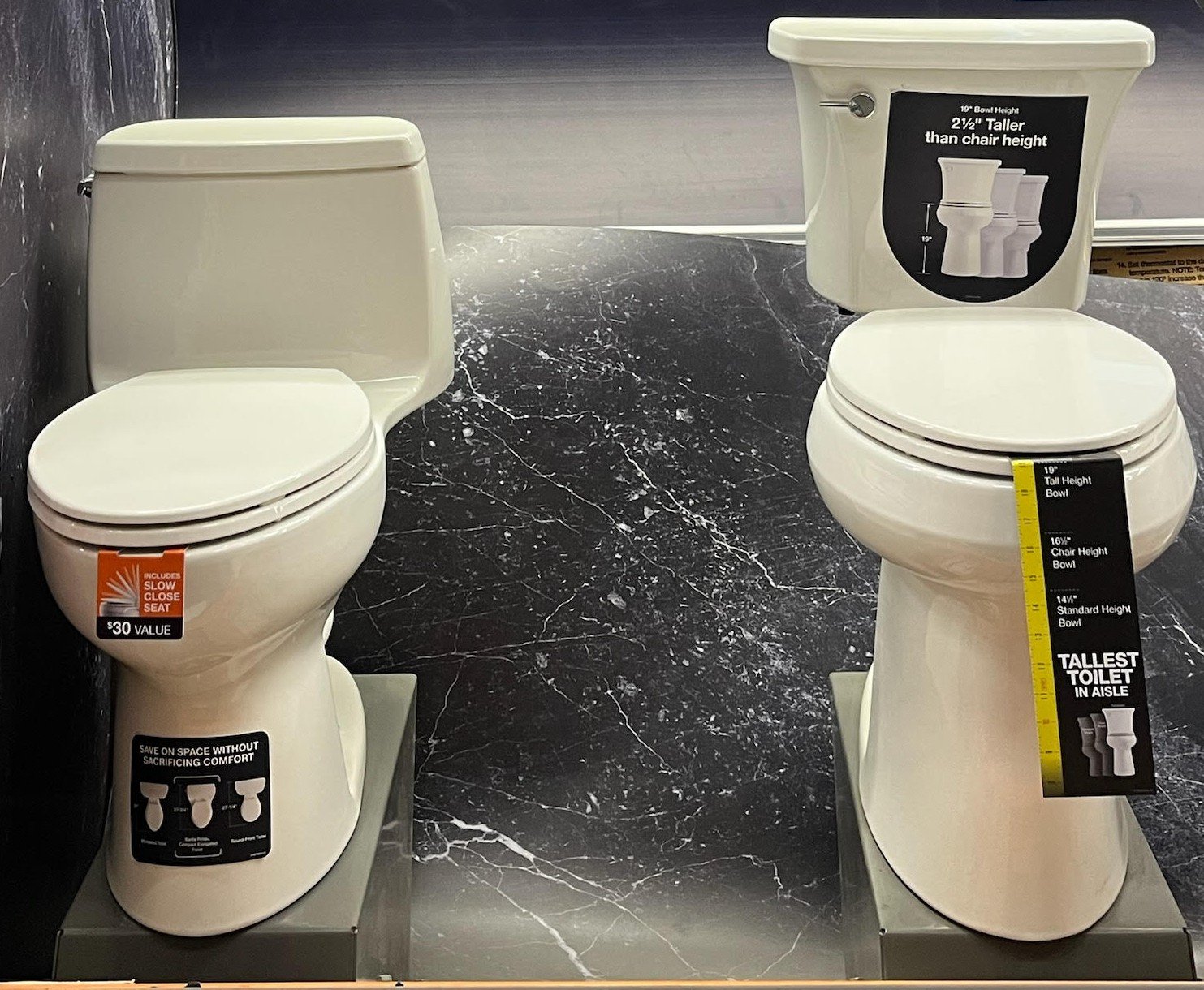
Here is a visual comparison for you. Standard toilet height on the left and the raised toilet on the right! A raised toilet is great UD!
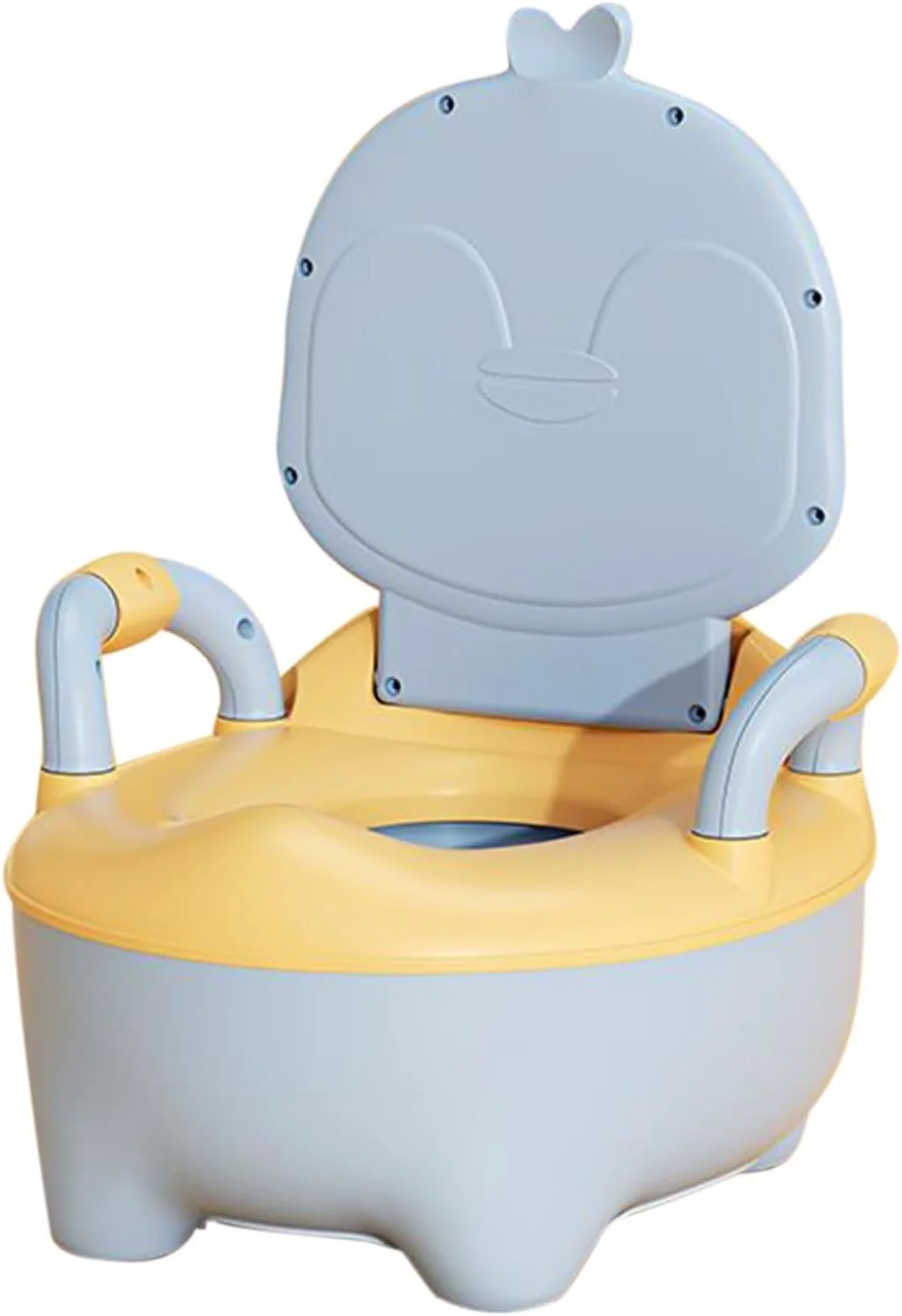
Adding a portable children’s potty that can be moved to where it’s most comfortable, safe, and easy to access makes great UD sense.
There are so many options for little ones learning to potty train. All my grandkids used the elevated toilets seats. Safety and comfort will dictate what that looks like for your family.
As you can see, toilets come in different sizes, but also colors, shapes, and an option of wall mounted or floor mounted. Except for height, all other toilet options are personal preference not for function. One is not easier to transfer to or sit on. Your style dictates which toilet is selected.
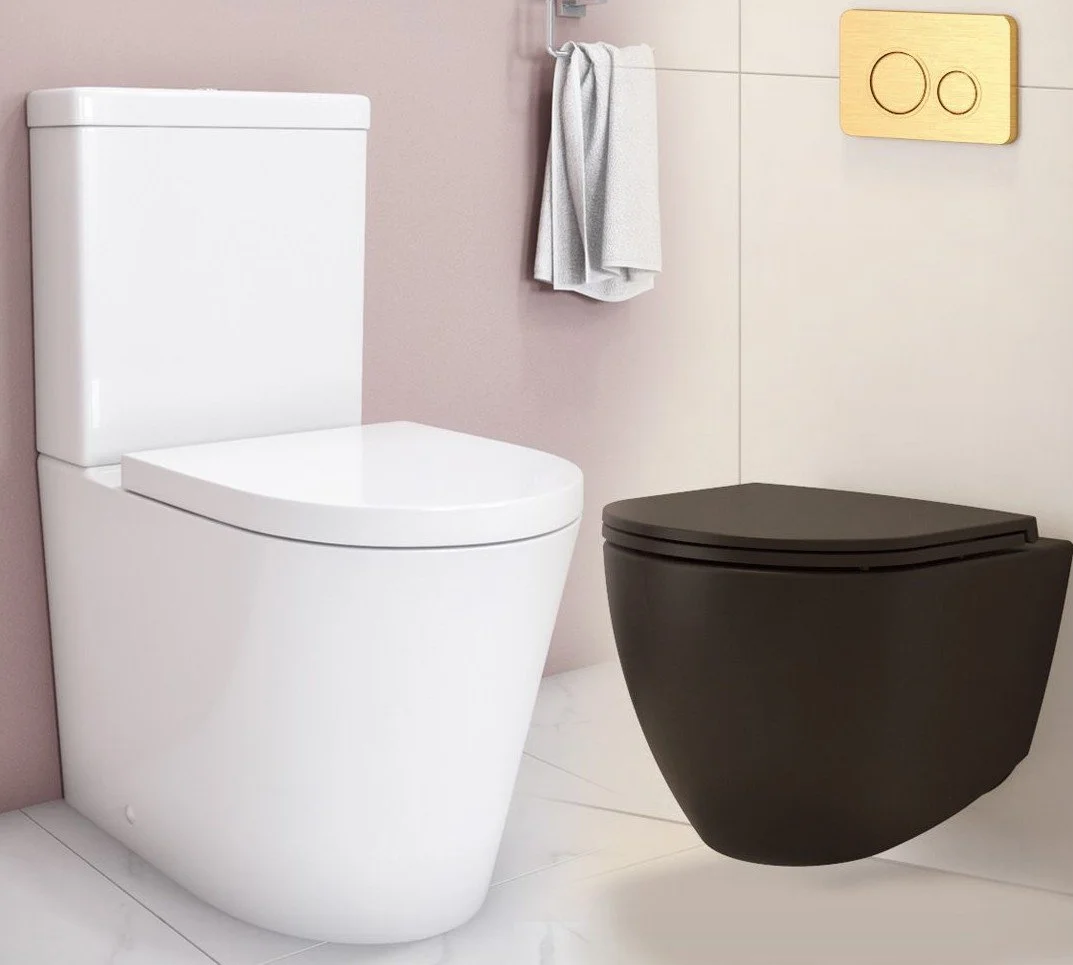
Some toilets are plumbed to the floor as in the left photo.
Some toilets are floating on right or wall-mounted on the left in this photo. My only comment is make sure the wall mounted flush is accessible if using a wheeled device. It may need to be off to the side at a level where the toilet paper holder would be mounted rather than behind you as in the photo below.
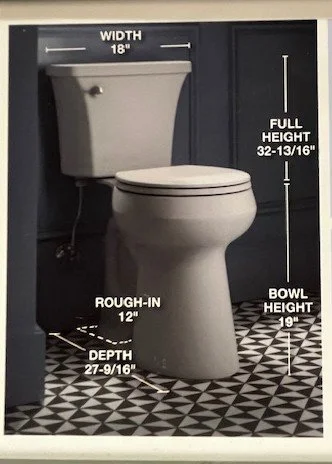
This Circular Raised Toilet is 19”
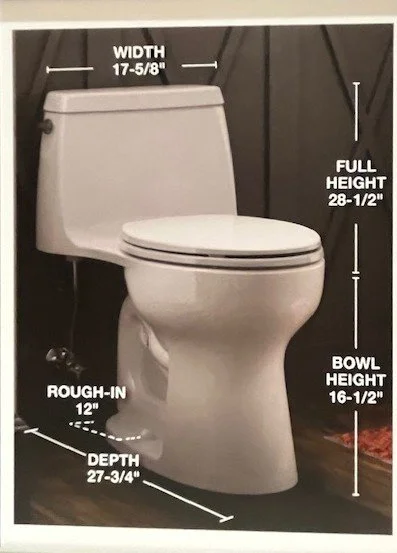
This Standard Oblong Toilet is 16.5”
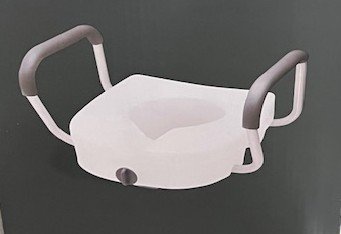
So you have low toilet , what can you do? This elevated toilet seat replaces the seat on a toilet. It is secured by a clamp which you tighten to the existing toilet bowl using the round knob in front. The additional hand rests help either transitioning to standing or sitting. This gives you an additional 4” of height to a standard toilet. This is a great UD product.
Bidets: A bidet, which can be placed on a toilet to replace the toilet seat, is recommended for anyone over the age of 60.
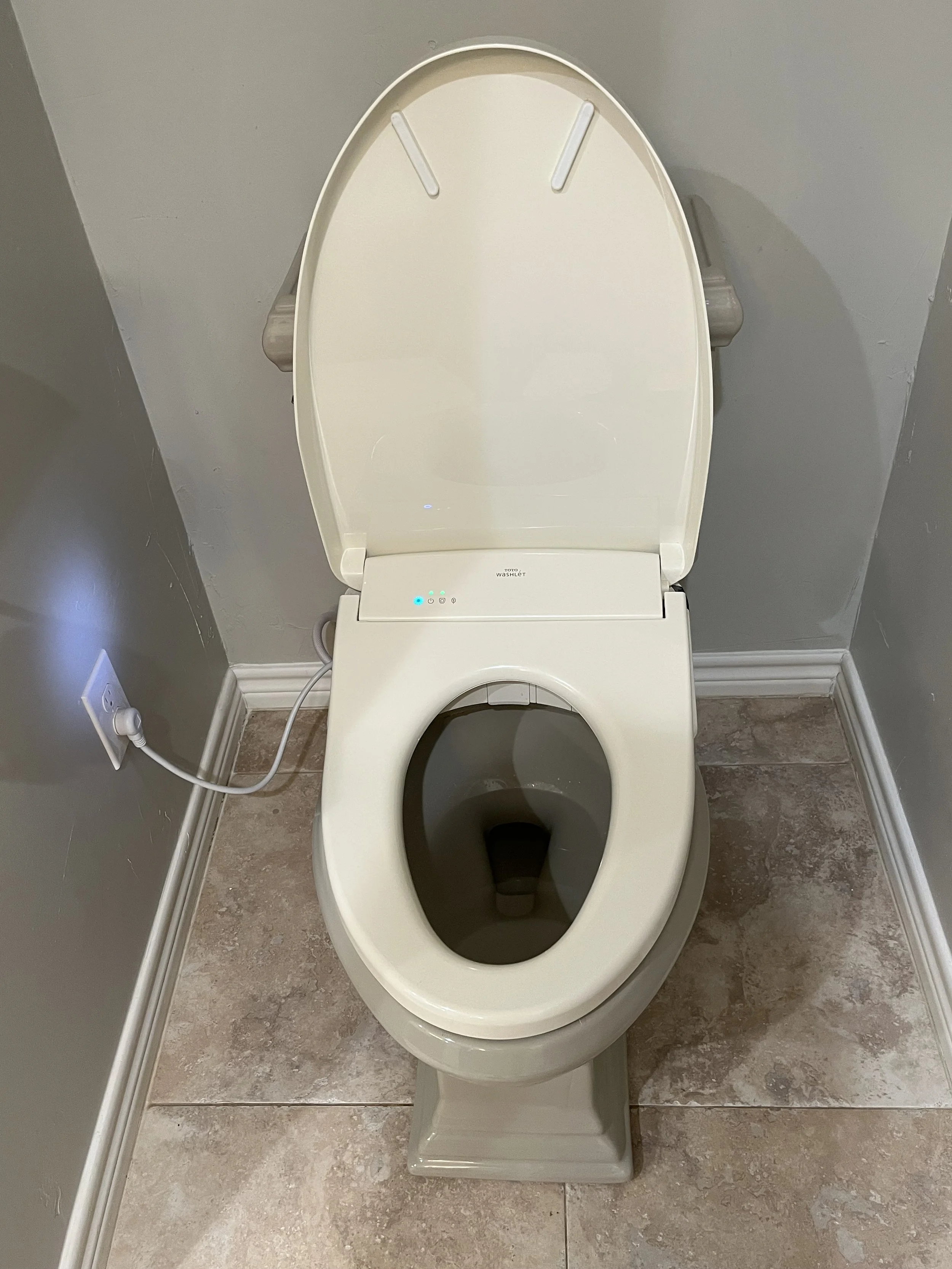
This TOTO Bidet has a heater and blower so power is needed.
Bidets help those who have fine motor issues, arthritis in their fingers/wrists or anyone who has had hand, wrist or shoulder surgery, an arm in a cast or has seated balance difficulties.
Bidets come with many features such as power heated dryer, sprayer, auto cleaner, automatic seat raise, different wash settings and more. When you want the power features you also need a power source close by the bidet. I have found that kids like to use the bidet as well.
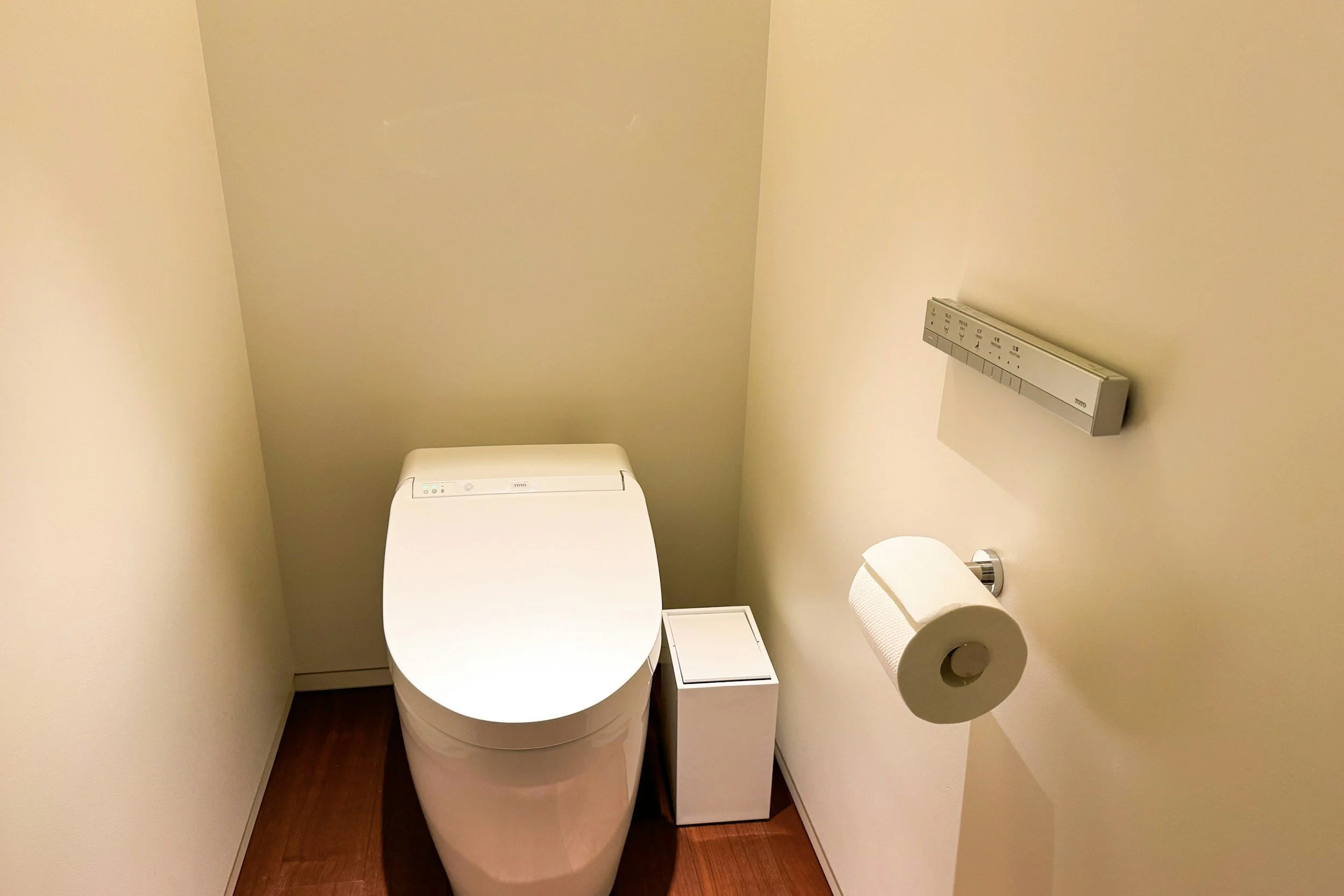
This Bidet has the typical power remote on the wall with features such as washes, self cleaning, temperature of water, dryer speeds, etc
.
Bidets that are not electrical can cost $160.00
Electrical Bidets can cost $150-$25,000.
Bidets are either mechanical or electronic. I prefer the electronic which have the many features most folks appreciate. Using a mechanical bidet is like using a garden hose on your tushy. Most folks find it too cold, harsh and less effective in washing.
Bidets have the added feature of a slow closelid. I love a slow close lid feature on any toilet seat so there is no more slamming noises. Bidets are another great UD product. Bidets can assist a person to remain independent and comfortable with their toileting needs.
Grab bars: I prefer one of the bathrooms in a home to be as accessible as possible by using grab bars at the toilet. Great UD. Grab bars can be placed on either side of the toilet especially if balance is an issue. A grab bar installed at the back of a toilet allows men to toilet more comfortably and safely stand. I am not saying it will improve their aim in the toilet however!
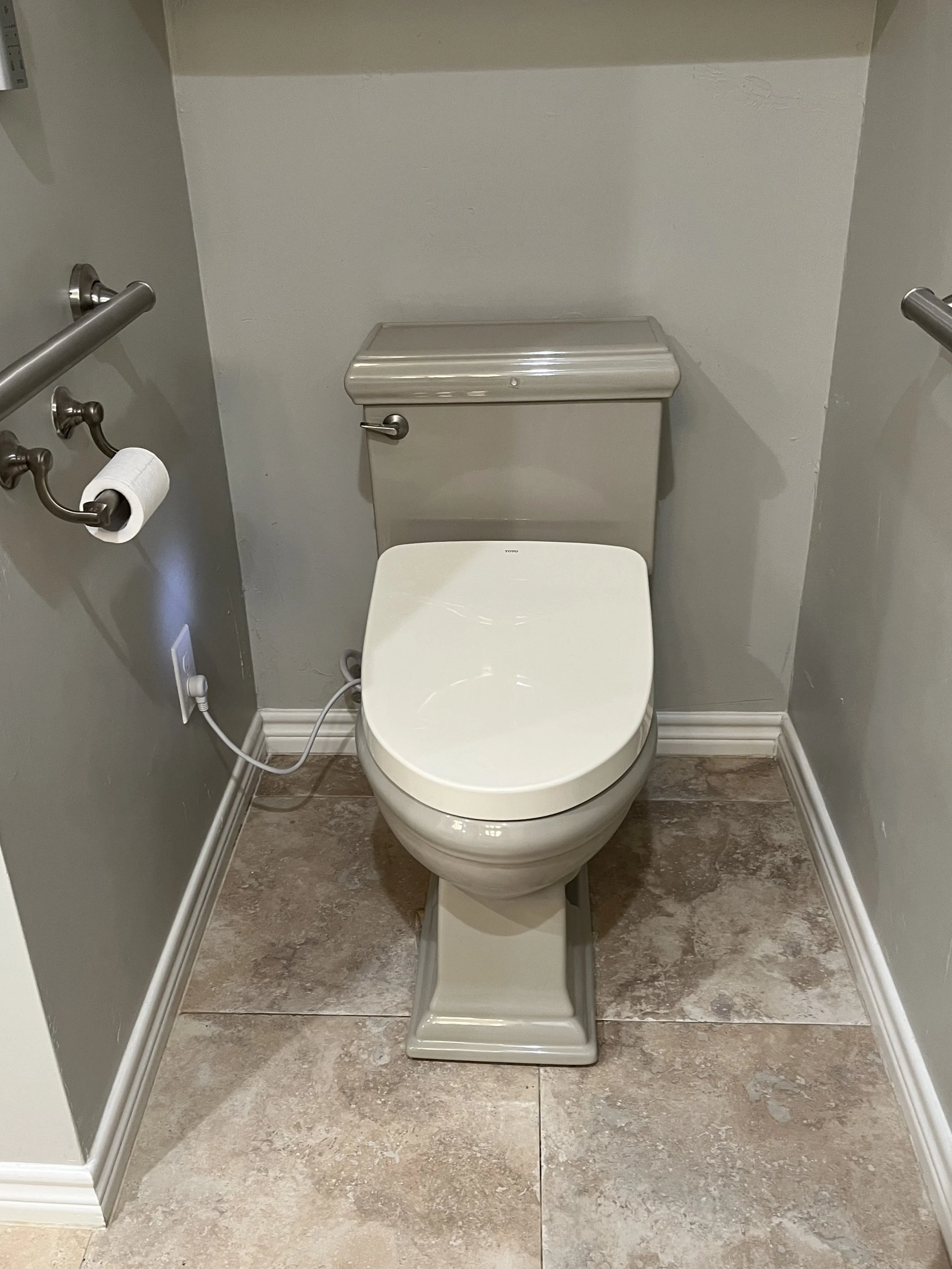
Two horizontal grab bars on either side of toilet allows for maintaining one’s balance. Note: it is not necessary to have a long grab bar as a 12” grab bar would suffice on either side of the toilet. If you are remodeling make sure the shorter bar is securely anchored into wood. Using a 16” grab bar will allow you to anchor it into a stud for better strength.
Great UD!
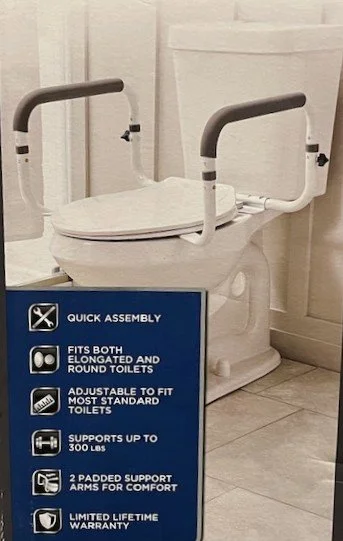
What if you have no walls to put a grab bar on but your need this safety feature? No problem, you can use a ”toilet support rail” which attaches to the toilet itself. You can get this at any home store or medical supply. It’s temporary so it can be used on any toilet and for any period of time.
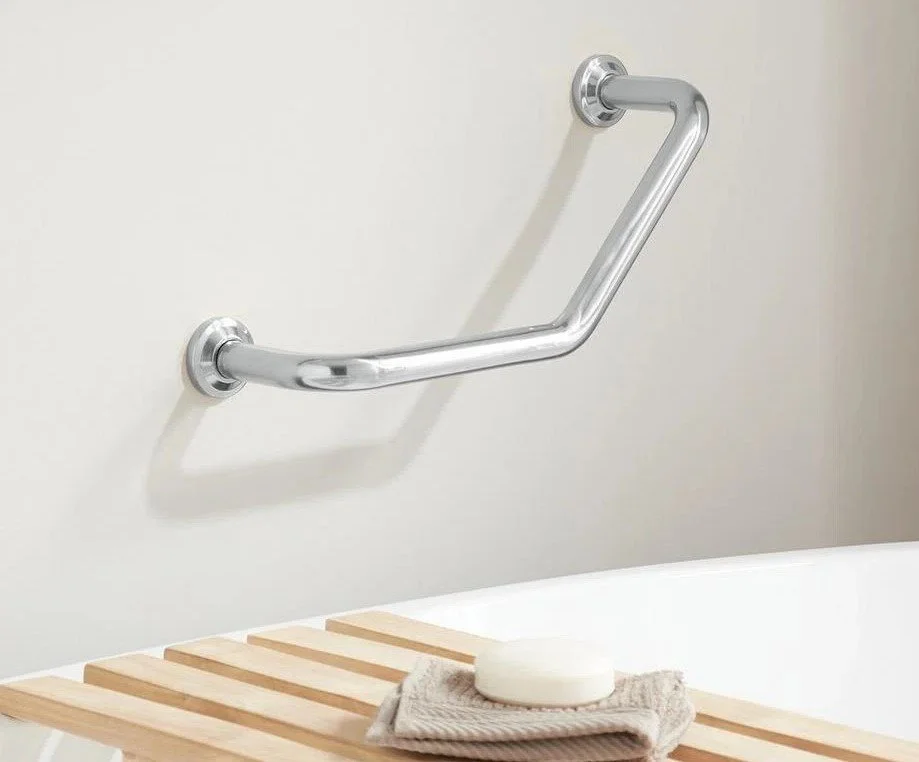
Grab bars can be placed on an angle by the toilet if space is tight and there is only one wall.
This angled type of grab bar works well for transitioning from sitting to standing on the toilet.
I have also seen a urinal installed in the WET shower area of a “boys” bathroom in a home with 3 very active athletic young men. Using the hand held shower spray, you could hose down the whole area at the end of the day. Think gym locker room. Now, as an adult entering that space to shower, it was a little weird but it worked for them. There was a private toilet area as well.
Floors: I would use floors that are easy to disinfect and clean in any toileting area.
Ready for More!
