Floors: Balancing Safety & Mobility
October 2026
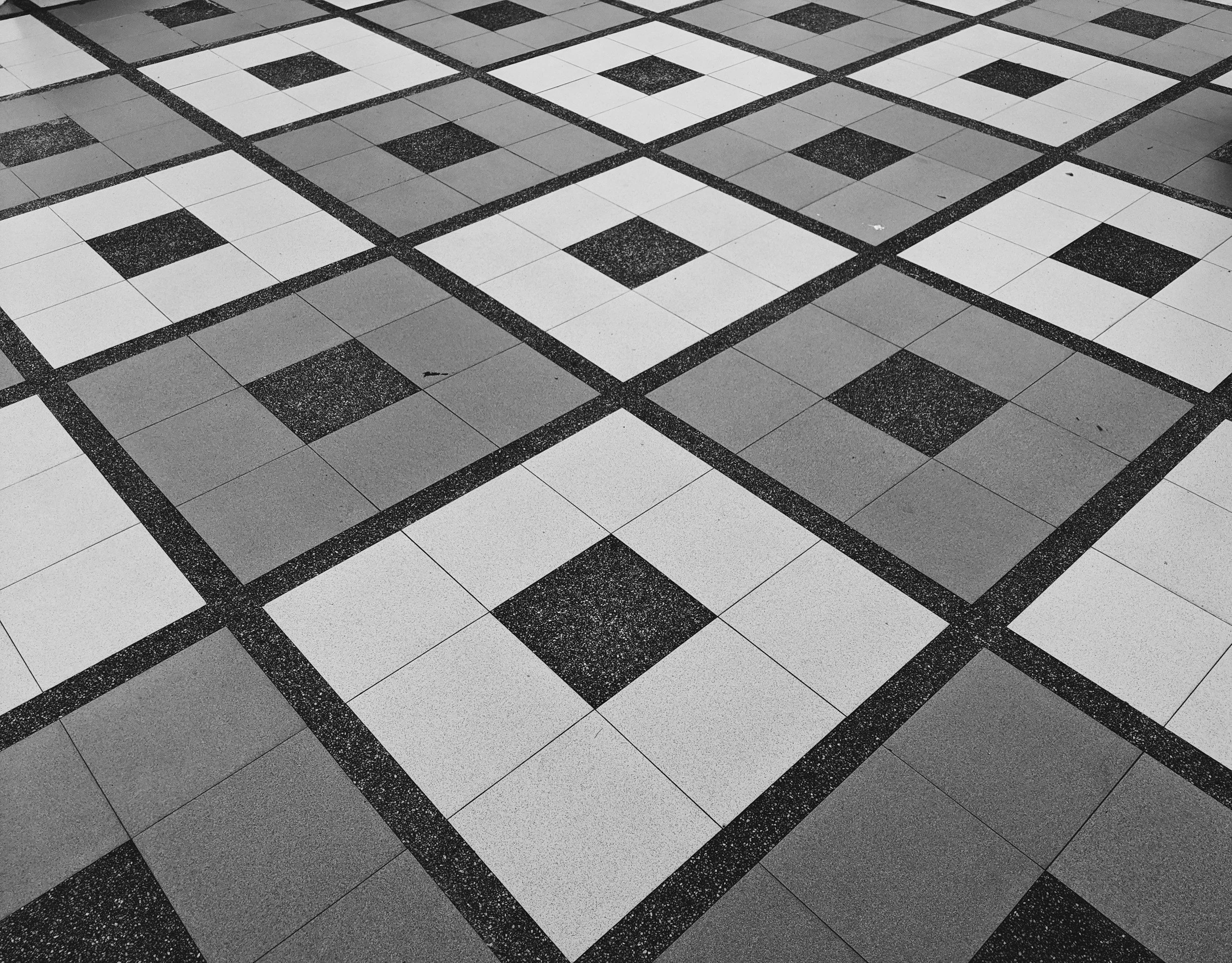
Floors can either work for you or against you.
Let’s explore how Universal Design (UD) can step in to help.
The American Disabilities Act (ADA) set minimum guidelines for flooring to ensure accessibility by addressing stability, firmness and slip resistance in floors. This addressed the primary issue of safety for electric wheelchair users at home and in the community. Floors must be stable and firm enough to support an electric scooter or chair. There are other nuances one should consider not only accessibility but friendly aging issues. Aging issues may be low vision, lack of depth perception, as well as mobility issues.
The best floor materials balance your ability to walk safely and are easy to move across. What I call, mobility with maneuverability.
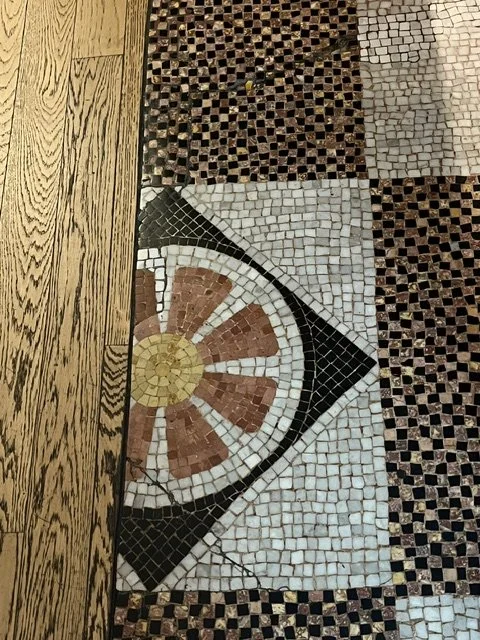
This 1908 floor from Barcelona, Spain demonstrates many great UD factors of floors. The transition flower mosaic piece visually tells you a change in floor material and has great contrasts , the wood is level with the mosaic, no tripping hazard, the small mosaics are non slip with lots of grout lines, Great contrast with the larger mosaic block patterns of light and dark. Visually brings awareness to the floor or cues one to a change. This floor is easy to move across safely =Mobility with maneuverability.
.
First identify which mobility aids are currently being used in the home or are frequently used. We have young athletic individuals who are constantly injuring themselves and using crutches, boots etc . In our home we have planned for this scenario in mind with regard to flooring. We have had strollers for babies, walkers and wheelchair users in our home. As you see, we run the entire gamut of mobility aids. UD is planning for present and future scenarios.
Second, identify if there are any thresholds currently in the flooring. Try to eliminate them completely or stay with the ADA guidelines which suggest a threshold of no more than ½″ or less. Another UD feature, called zero entries.
Third, does anyone have any special needs? Vision becomes an issue as we age. You may need to make selections of flooring based on non glare materials and use contrasting colors for safe and easy navigation in the home. These are UD features of safety and ease.
Fourth, which areas of the house need flooring? Do the floors need to be water resistant, non slip, easy to clean, a soft surface, or a warm surface?
Fifth, which floor material matches the needs of those in the home best? This may include vinyl, wood, concrete, tile or low pile carpet.
You will find a great floor match by balancing mobility and aging needs with maneuverability with the floor options.
Floor coverings : I prefer one continuous type of surface to cover the most of the home space starting at the front entrance. All tile, all vinyl, all wood but NOT all carpet. Carpets create too much friction with anything having wheels: strollers, electric or manual wheelchairs, adult, children or baby walkers, Hoyer lifts, any adult or child scooter, or crutches. Any floor that is not continuous can be problematic to personal mobility and transfers as time goes on.

I have a continuous engineered hardwood floor except in the bathrooms and laundry which have tile.
The hardwood floor has a wood transition piece connecting it to the tiled bathroom floor.
Smooth continuous flooring , low resistance, and no bumps= mobility with maneuverability
Rugs: can cause tripping hazards so strategically place a rug with a mat under it so it doesn’t move. I do use rugs with no pile, under heavy pieces of furniture that cover most of the rug so it is not a tripping hazard. I also confess that when I have a visitor that has balance issues, vision issues, or mobility issues, I roll up ALL my rugs so that my floor is one continuous uninterrupted surface. At my front door currently, I have a washable rug with a rubber backing to prevent it from moving. I like that the rug is washable cause my grandkids trek in lots of dirt and I do wash it. Currently, I don’t have any one with mobility issues coming or living in my home. You must constantly assess whether a rug is still safe in your home. Always err on the side of caution and eliminate throw rugs, rugs that are curling at the edge, or any rug that tends to move and not stay put. Rugs can dampen noise and make a space feel cozy , which are comfort features. Rugs can be a fun design feature. Think about who comes in and out the door and whether it would be a tripping hazard. No rug is worth a FALL.
Stable floor surfaces will resist movement= mobility with maneuverability, a good age friendly/UD safety feature.
Lets look at the pros and cons of each flooring option.
Hardwood and engineered floors can be scratched by a walker but allow for smooth maneuvering. Floating or click locking floating floors can start to shift under the weight of an electric wheelchair or scooter. Usually a wood cleaner is used to maintain the floors.
Vinyl sheet or LVT (luxury vinyl tile) offer smooth, scuff-resistant surfaces for dogs, wheelchairs, scooters, walkers etc. and is water resistance as well. Easy to clean. Comes in a variety of colors and textures. Cost effective.
A low pile carpet will create lower resistance to any mobility aid. (crutches, walkers, wheelchairs, scooters). ADA suggests the pile 1/2” or shorter , tightly woven and firmly secured to prevent any bunching. Carpet can dampen noise, feel warm but may be difficult to clean. It can be a cost effective option.
Rugs will create resistance to any wheeled devices or devices with a rubber tip like crutches or a cane. Rugs should have a non slip mat under them or are anchored to the floor, can feel soft and warm, dampen noise and are easy to clean if washable. Can be a tripping hazard if not anchored.
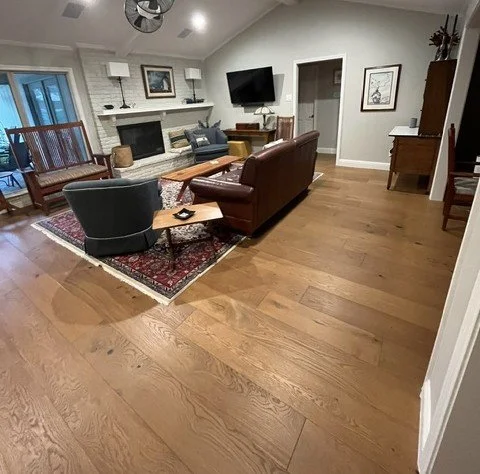
Note: when using a rug, keep it out of the normal walking path or the traffic flow, instead use them in the middle of spaces which allow one to walk around the space with out tripping on the rug.
I am not a fan of runners. It’s safer to have a clear path to walk on with out worrying about a rug. This room has a rug in the middle with a large walking area around it allowing one to easily move and avoid a trip= mobility with maneuverability
Ceramic stone tile: can become slippery when wet so use smaller tiles with lots of grout lines so the area is not slick. Tile is a hard surface, objects can break as well as the tile can chip. Tile will feel cold. Grout lines may need attention and the tile may be difficult to repair.
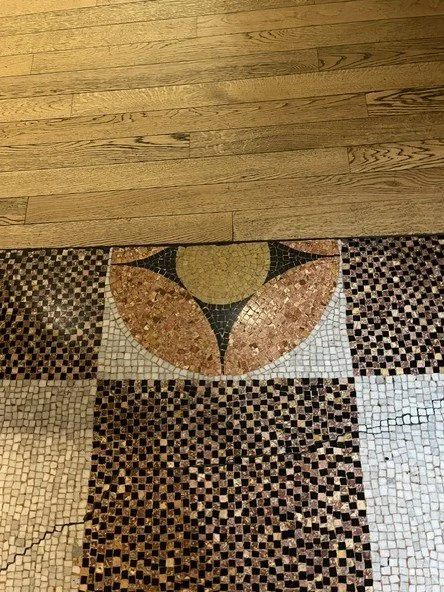
Notice this 1908 Gaudi floor has a crack in it but by using the small tiles a patch is possible. Think about your needs and which floor matches your needs best. These tiles are in an entrance and connect to a living space. The tiles are durable, easy to clean, non slip, with smooth transitions all good UD.
Concrete: again it’s a hard surface so items can break, has low resistance to mobility aids and can tolerate water. You may find concrete that has not been scored very slippery. If using concrete flooring in garages or in the home give it texture so it’s a safer option. Relatively easy to clean. Feels cool.
What about heated floors?
Radiant heating of floors in the bathroom is becoming more common. It’s a personal preference. Much like a heater in the bath, a heated floor can an offer comfort. According to Warmly Yours, it is 25-30% more efficient than forced air heating. The heat is uniform, operates quietly, may be a factor in resale of the home, and costs $15-30 per sq. ft. installed which is higher than forced air. Upfront cost and the electrical needs must be considered. Use a smart thermostat programmed for efficiency. It has a 25 yr warranty. No air is circulated so there is no dust. Cons: upfront higher costs than basic forced air.
UD/Age Friendly Optimal Checklist for Floors:
If possible, one continuous floor surface throughout the home.
Avoid materials or construction methods that create bumpy and uneven surfaces in areas and along routes required to be accessible.
All floors must be structurally sound with no vertical flex in the floor which can make rolling difficult. This includes concrete, vinyl, and wood.
Flooring must tolerate high pressure weight on it.
A contrast between the surfaces if not continuous and the transition piece is obvious by use of color or texture to identify it.
Transition pieces between any floor surfaces must be no more than 1/4” in difference or smooth to prevent a trip.
Easy to maintain particularly in kitchens and bathrooms where a lot of spills occur.
If using tile particularly on a bath floor use a small tile with lots of grout lines which is safer allowing for better gripping.
Those with visual impairments may need the floor to contrast with the walls for easy navigation in a space. Contrast flooring with the furniture makes it easier to find the furniture. Avoid high gloss or polished floors which can cause a glare and can impact ones depth perception. These features will be helpful to others without a visual impairment as well.
Floor and ground surfaces must be stable, firm, and slip resistant.
Floor surfaces remain unchanged by external forces, objects, or materials.
All rugs on floors should have non slip mats under them.
All carpets/rugs should have low pile creating lower resistance.
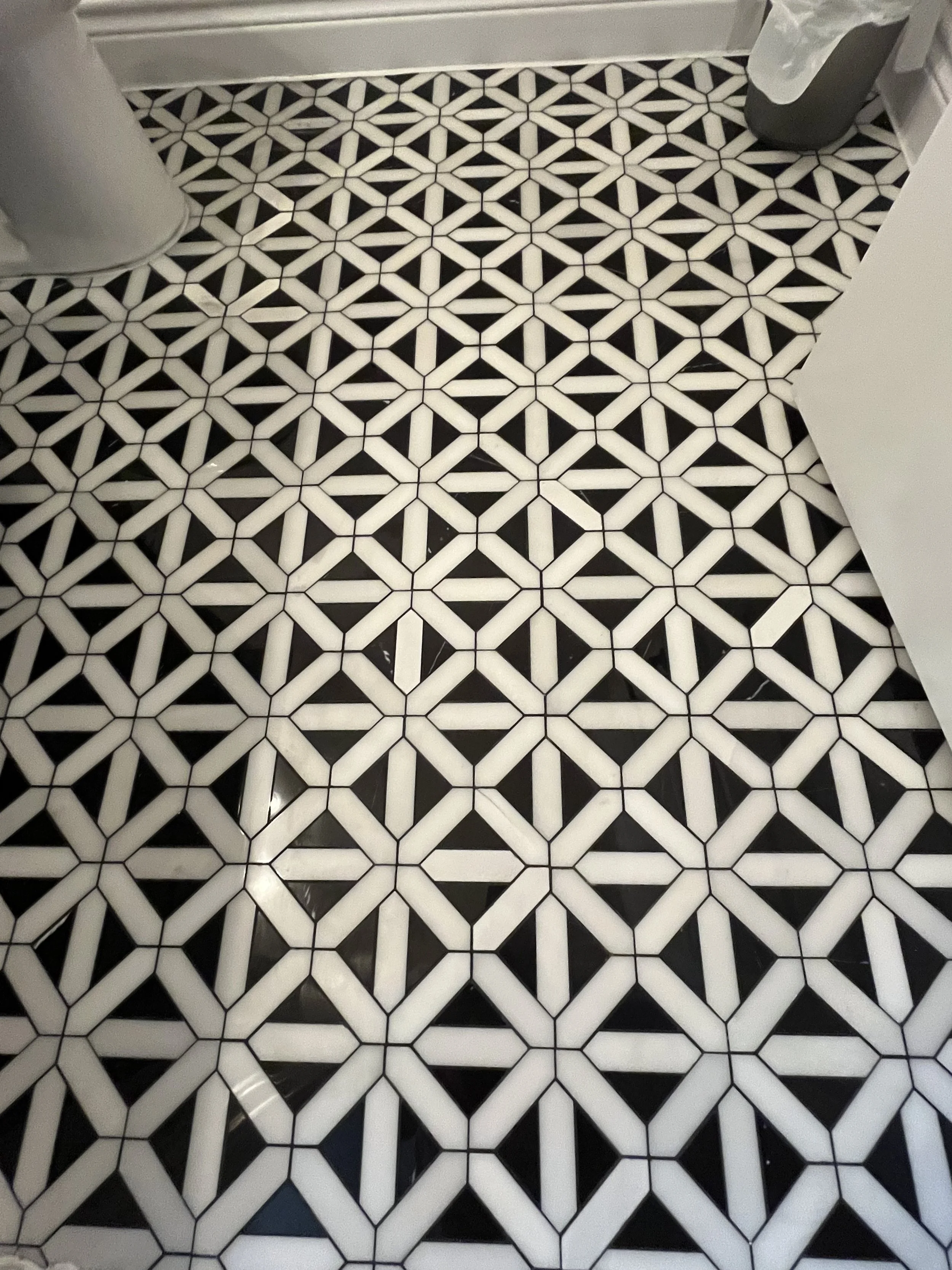
When you balance safety, mobility and aging needs, you can find just the right flooring.
This floor contrasts with the walls, a great age friendly/UD feature for anyone but particularly for someone with visual difficulties.
Are your floors working for you or against you? UD can step in balancing safety & movement giving you = mobility with maneuverability!
Ready for More?
